Key takeaways
- Your pelvic floor is a sling of muscles that supports your bladder, bowel and uterus and plays a role in continence and sexual sensation.
- Kegel balls are a feedback tool for pelvic floor training, not a cure, and good Kegel technique matters more than the gadget.
- Start with a light, body-safe silicone set with a retrieval cord, use water-based lube and keep early sessions short.
- Clean Kegel balls before and after every use, including the cord, and store them dry in their own pouch.
- See a clinician or pelvic floor physical therapist if you have pain, leaking, heaviness, recent childbirth or surgery, or symptoms that aren't improving.
Kegel balls are small weighted balls inserted into the vagina. Your pelvic floor muscles engage to hold them, which can support Kegel exercises. Start with a light, body-safe silicone set, use water-based lube, keep sessions short and clean them after every use. If you have pain, leaking, pregnancy or recent surgery, check with a clinician first.
Your pelvic floor works hard all day, every day, and most of us never give it a second thought. Then something nudges it into view: a little leak when you sneeze, changes after having a baby, or plain curiosity after Kegel balls show up in your feed. The good news? Getting to know these muscles is easy and private, and it can feel surprisingly empowering.
This guide covers what your pelvic floor does, how Kegel exercises work and where Kegel balls fit in. It also walks you through picking, using and caring for your first set. It's educational, not medical advice. If something here doesn't match what your body is telling you, a clinician is your best next step.
What is the pelvic floor, and why does it matter?
Your pelvic floor is a group of muscles and connective tissue at the base of your pelvis. It stretches like a hammock from your pubic bone at the front to your tailbone at the back. Everyone has one, whatever their anatomy.
These muscles do a lot of quiet work:
- Support: they help hold up your bladder, your bowel and, if you have one, your uterus.
- Continence: they help you control when you pee, poo and pass gas.
- Stability: they team up with your deep core and breathing muscles to support your spine and posture.
- Sexual function: they contract during arousal and orgasm. Knowing how they feel can make it easier to tune into sensation.
Like any muscles, they can become weaker or less coordinated over time. Common factors linked with pelvic floor changes include:
- pregnancy and childbirth
- the hormonal shifts of menopause
- a chronic cough
- constipation and straining
- heavy lifting
- simply getting older
Pelvic floor muscles can also be too tense, which matters later in this guide.
What are Kegel exercises, and how do you find the right muscles?
Kegel exercises, also called pelvic floor muscle training, are deliberate squeezes and releases of your pelvic floor. They're named after Dr. Arnold Kegel, the gynecologist who popularized them in the mid-20th century. Major health bodies such as the NHS and Mayo Clinic recommend them widely.
Finding the muscles
Imagine you're trying to hold in gas and stop the flow of pee at the same time. That gentle inward-and-upward lift is your pelvic floor.
Some people stop their urine mid-flow once, just to identify the feeling. Don't make it a habit, though. Regularly interrupting your pee can get in the way of emptying your bladder properly.
Getting the technique right
- Breathe normally. Holding your breath is one of the most common mistakes.
- Keep everything else relaxed. Your buttocks, thighs and belly should stay soft. If your butt clenches, you're using the wrong muscles.
- Value the release as much as the squeeze. Letting the muscles fully relax between contractions is part of the exercise, not a break from it.
- Start lying down if the muscles are easier to feel that way, then move on to sitting and standing.
The right number of squeezes and length of hold depend on your body and your goals. Follow your clinician's or physical therapist's guidance rather than a one-size-fits-all routine from the internet.
What are Kegel balls, and how are they different from Ben Wa balls?
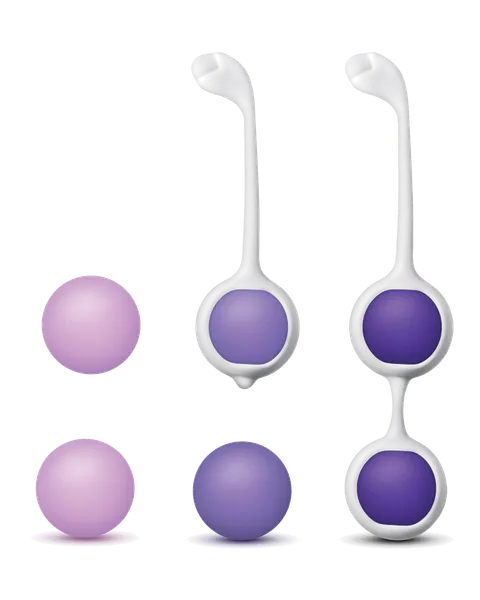
Kegel balls are small, smooth, weighted balls designed to be inserted into the vagina. Your pelvic floor naturally engages to hold them in place. That gives you something to gently grip against, plus a physical cue that helps you feel which muscles you're working.
Most modern sets share a few features:
- They're made of body-safe silicone.
- They come as a single ball or a connected pair.
- They have a retrieval cord, a loop or tail that stays outside the body so removal is easy.
Ben Wa balls are the traditional cousin. They're usually small, separate balls, often made of metal or glass, with no cord. They're associated more with sensation than structured training, and the missing cord makes them less beginner-friendly.
Kegel balls also come in a few variations:
- Inner-ball designs: a smaller ball rolls inside the outer shell and creates subtle movement as you shift.
- Progressive sets: several weights you work through gradually over time.
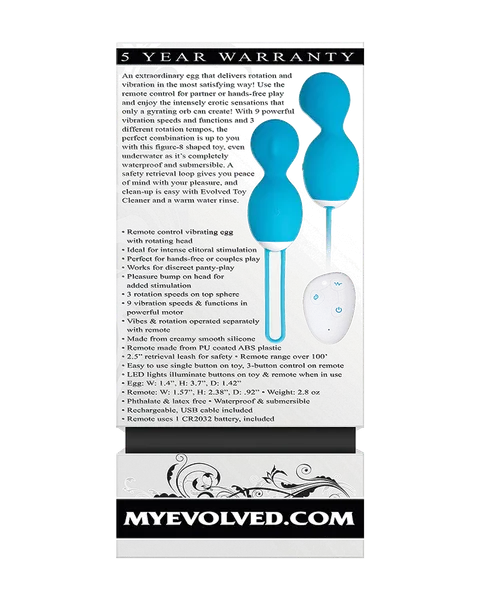
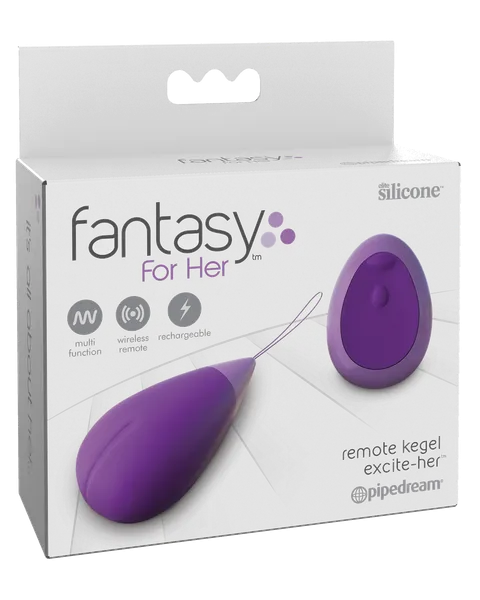
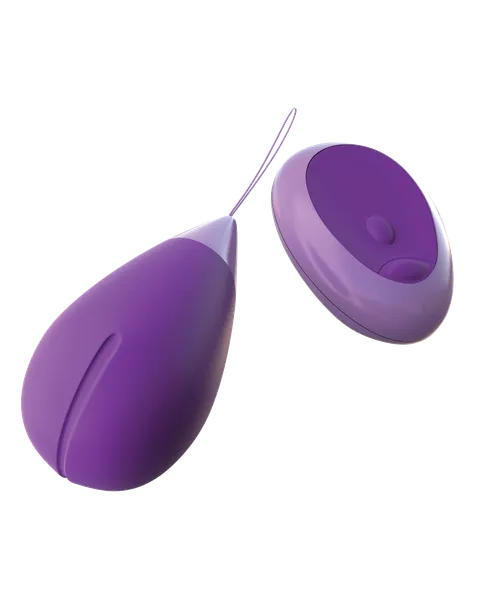
- Powered versions: rechargeable designs that add vibration.
Do Kegel balls actually work?
Honest answer: they can be a helpful tool, but they aren't magic.
Pelvic floor muscle training itself is a well-established first-line approach for some types of bladder leakage. That's especially true of stress incontinence, meaning leaks when you cough, laugh, sneeze or exercise. Weighted vaginal devices have been studied as one way to do that training, and some people find the feedback helps them practice more consistently. The evidence that they beat well-done Kegels alone is mixed.
Where Kegel balls really shine for many people is awareness. A gentle weight helps you find muscles that are otherwise hard to picture. That connection can carry over into everyday life, and into how you experience pleasure.
Think of Kegel balls like a resistance band for a muscle group you can't see: useful and motivating, and best paired with good technique.
Who should skip Kegel balls or check with a clinician first?
Kegel balls aren't for everyone, and more squeezing isn't always better. Talk to a clinician before using them if any of these apply:
- You're pregnant.
- You recently gave birth and haven't been cleared for vaginal insertion.
- You've had recent pelvic, vaginal or abdominal surgery.
- You have pelvic pain, pain with penetration, or a diagnosed condition such as vaginismus.
- You have, or think you might have, a vaginal or urinary tract infection.
- You've been diagnosed with pelvic organ prolapse.
- You use an IUD, a pessary or another internal device and aren't sure the two are compatible.
A note on a "too tight" pelvic floor
A hypertonic, or overactive, pelvic floor is one that has trouble relaxing. It can show up as:
- pelvic pain
- painful sex
- constipation
- a frequent, urgent need to pee
Strengthening exercises can make a hypertonic pelvic floor worse. Care usually focuses on relaxation instead, ideally guided by a pelvic floor physical therapist.
How do you choose your first set of Kegel balls?
A few features make the biggest difference for beginners:
- Body-safe material: non-porous, medical-grade silicone is the gold standard. Our guide to what "body-safe" actually means explains why, and sex toy materials explained goes deeper.
- A sturdy retrieval cord: it makes removal easy and stress-free.
- A light starting weight: start light, and only move up when the lighter weight feels genuinely easy.
- Single or double: a single ball is generally simpler for beginners. Doubles add weight and movement.
| Type | Best for | Good to know | One to try |
|---|---|---|---|
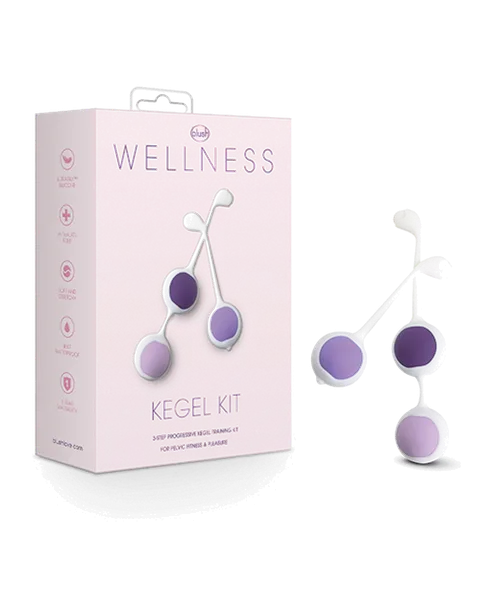
| Starter training kit | First-timers who want a structured start | Kits usually include more than one option so you can progress | Blush Wellness Kegel Training Kit |
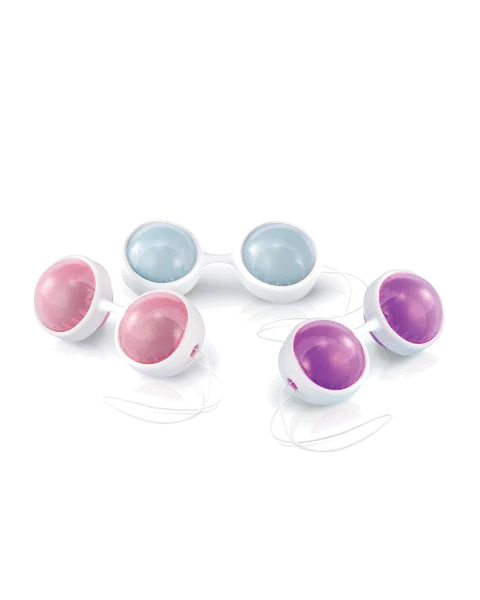
| Interchangeable weight set | Gradual progression with one premium set | Swap weights as you get stronger, and check what's included | LELO Beads Plus |
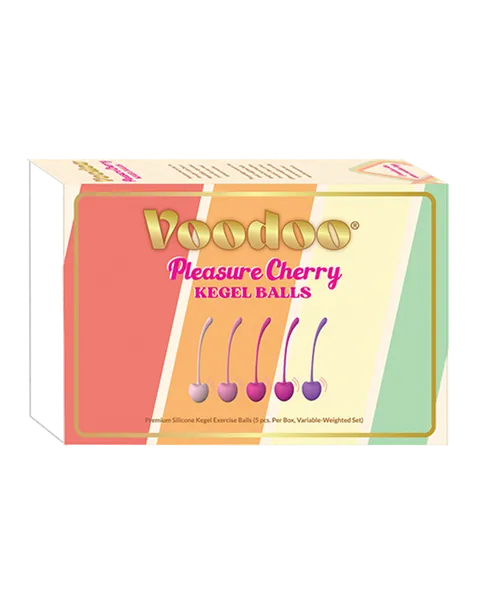
| Weight pack | Trying a range of weights | Always begin with the lightest and use one at a time | Voodoo Cherry Kegel Balls Weight Pack |
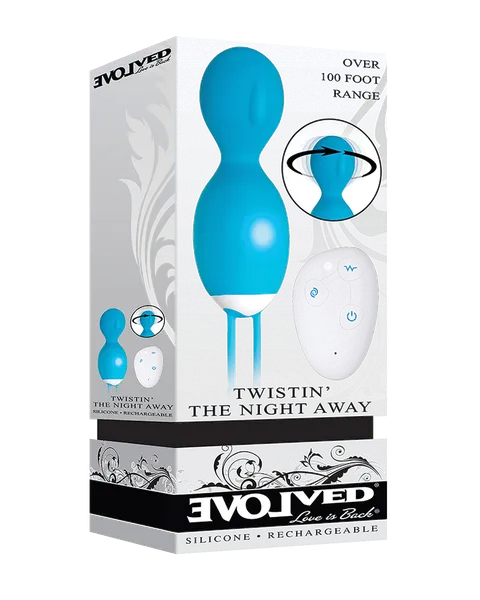
| Rechargeable / powered | Pairing training with sensation | Needs charging, so follow the care instructions for powered toys | Evolved Twistin The Night Away Kegel |
You'll find more options in our Toy Care & Essentials and wider Wellness collections. One heads-up: for hygiene reasons, our 30-day returns apply to unopened items only. Read the product details carefully before you order.
How do you use Kegel balls for the first time?
- Prep. Wash your hands and clean the balls (see the next section).
- Add lube. Apply a small amount of water-based lube, such as Swiss Navy Water Based Lube or Dame Alu. Skip silicone lube on silicone toys, because it can damage the surface. Our water vs. silicone lube guide explains why, and the full range is in Lubricants.
- Get comfortable. Lying back with your knees bent is easiest. Relax, breathe out, and gently insert the ball until it sits comfortably inside, roughly where a tampon would. Leave the cord outside your body.
- Tune in. Try a few gentle squeezes and full releases while you're still lying down.
- Stand up slowly. If the ball slips at first, that's common. Go back to lying down, keep the session shorter, or try a different size.
- Keep it short. A few minutes is plenty at the start. Stop right away if anything hurts.
- Remove gently. Relax and pull slowly on the cord. Bearing down slightly can help.
A few ground rules:
- Don't sleep in Kegel balls.
- Don't wear them for long stretches.
- Never use them anally. They don't have the flared base anal toys need, so see our anal play for beginners guide for that instead.
How do you clean and store Kegel balls?
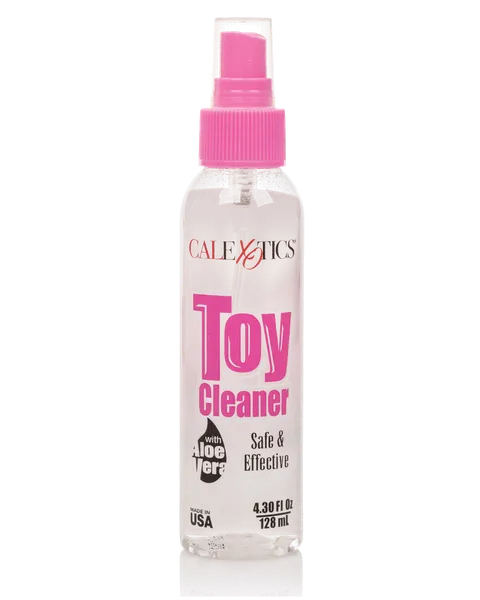
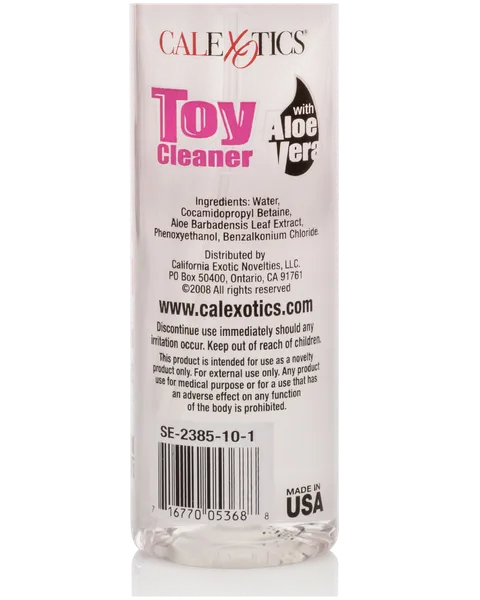
Clean your Kegel balls before and after every use. Warm water with a mild, unscented soap works, as does a dedicated toy cleaner. Good options include:
- Universal Toy Cleaner w/Aloe Vera
- Main Squeeze Toy Cleaner
- Swiss Navy Toy & Body Cleaner
- Sensuva Think Clean Thoughts
A few cleaning tips:
- Pay extra attention to the retrieval cord and any seams, where residue likes to hide.
- If your set is powered, only submerge it if the manufacturer says it's waterproof.
- Let everything air-dry completely.
- Store the balls in their own pouch, away from toys made of other materials.
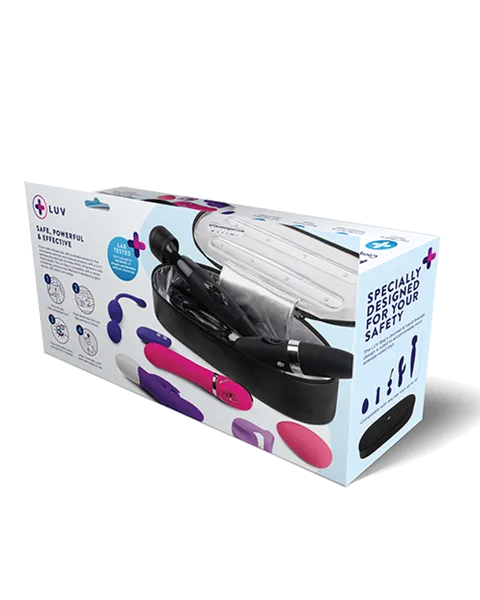
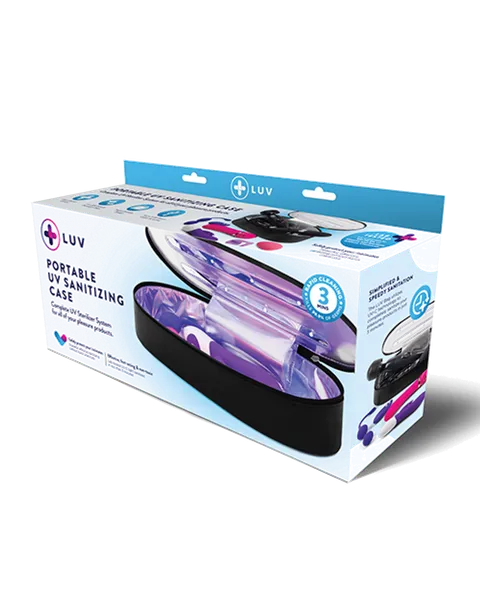
For an extra step, a LUV Portable UV Sanitizing Case doubles as discreet storage. Our guides on how to clean sex toys and how to store and charge them have more detail.
When should you talk to a clinician about your pelvic floor?
Pelvic floor concerns are common and very treatable. They're also exactly what doctors, nurses and pelvic floor physical therapists are there for. Book an appointment if you notice any of the following:
- Leaking urine or stool that bothers you or affects daily life
- A sudden or frequent, urgent need to pee
- A feeling of heaviness, dragging or a bulge in your vagina, which can be a sign of prolapse
- Pain during sex, during insertion or in your pelvis
- Trouble feeling your pelvic floor contract or relax at all
- Bleeding, unusual discharge or irritation after using a toy
- Symptoms that haven't improved after a few months of consistent practice
- Any pelvic floor concerns after pregnancy, childbirth or surgery
A pelvic floor physical therapist is a physiotherapist who specializes in these muscles. They can assess whether yours need strengthening, relaxing or better coordination, and build a plan around you. Your gynecologist or primary care provider can refer you. The American College of Obstetricians and Gynecologists also offers trustworthy patient information.
If you're in perimenopause or menopause, you may notice changes in comfort too. Our guides to menopause and pleasure and vaginal dryness are good companions to this one.
Ready to get started?
Start light, go slow and treat the whole thing as getting to know your body rather than a test to pass. Every order ships in a plain, discreet box with a neutral billing name. Shipping is free over $79, and you'll earn rewards points on every purchase. Your pelvic floor has been looking after you for years, and a little attention back is well deserved.
Frequently asked questions
How long should I wear Kegel balls?
Start with short sessions of just a few minutes, ideally lying down, and build up gradually as long as everything feels comfortable. Avoid wearing them for hours at a time or overnight. If a clinician or pelvic floor physical therapist has given you a specific routine, follow that. Stop and remove them right away if you feel pain, cramping or soreness.
Can Kegel balls fall out or get stuck?
They can slip out, especially when you first stand up, and that's common for beginners. Try a lighter session lying down or a different size. They can't travel anywhere past your cervix. If you're struggling to remove one, relax, bear down gently and pull slowly on the retrieval cord. If you still can't remove it, contact a healthcare provider.
Can I use Kegel balls after giving birth?
Wait until your clinician has cleared you for vaginal insertion, which usually happens at or after a postpartum check. Your body needs time to heal, especially after tearing, stitches or a cesarean. Gentle Kegel exercises without devices are often encouraged earlier, but ask your provider. A pelvic floor physical therapist can be especially helpful after birth.
Do Kegel balls help with bladder leaks?
Pelvic floor muscle training is a well-established first-line approach for some bladder leakage, especially stress incontinence. Kegel balls are one tool that may help you train more consistently, though evidence that they beat well-done Kegels alone is mixed. Leaks have several possible causes, so see a clinician for a proper assessment before relying on any device.
Can I use Kegel balls during my period or with an IUD?
Most guidance suggests skipping Kegel balls during your period and using them between cycles instead, mainly for comfort and hygiene. If you have an IUD, a pessary or another internal device, check with your clinician first so you can be sure the two are compatible. Always remove the balls gently and slowly using the retrieval cord.
Can Kegel exercises improve sex?
Many people find that pelvic floor awareness helps them tune into sensation, and these muscles do contract during arousal and orgasm. Results vary from person to person, though, and Kegels aren't a fix for every concern. If sex is painful, don't add strengthening exercises. Pain can signal an overly tight pelvic floor or another issue a clinician should check.
Are Kegels only for people with vaginas?
No. Everyone has a pelvic floor, and people with penises can do Kegel exercises too, often to support bladder control. Kegel balls specifically are designed for vaginal use, so they aren't suitable for other bodies or for anal use. For guidance tailored to your anatomy and goals, a clinician or pelvic floor physical therapist is the best resource.
Browse more toy care & essentials, all shipped in a plain box with discreet billing.